


Why Food Safety Experts Are Rethinking Wood and Plastic Cutting Boards—And What They Use Instead

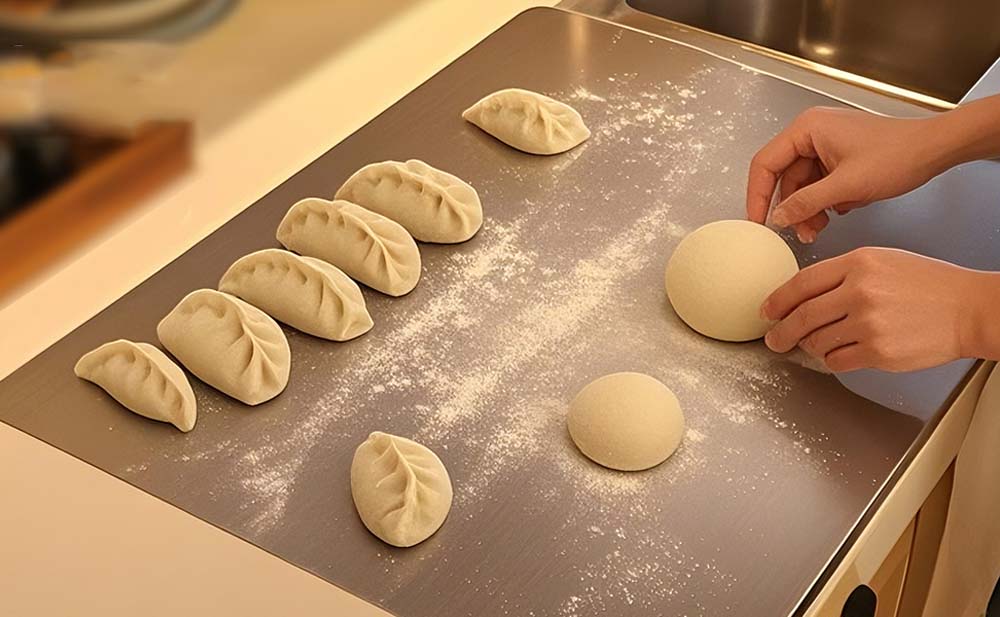
You wash it after every use. You scrub it carefully. You may even use hot water and soap.
But here’s what many home cooks don’t realize:
A cutting board can look clean and still hold bacteria below the surface.
That matters when the same board is used every day for meat, produce, and family meals.
Dr. Sarah Chen, PhD in Food Microbiology at Cornell University, recently tested 200 household cutting boards:
“Over 70% harbored bacterial colonies deep within the material—even boards that were regularly washed and scrubbed.”
It’s part of what some kitchen safety experts call “The Porosity Trap”—contamination that can hide in pores, grain, and knife marks.
The Problem With Traditional Cutting Boards
Wooden boards are “traditional” and “natural.” Plastic boards are “affordable” and “convenient.”
But both materials can become harder to keep truly clean over time.
Here’s why:
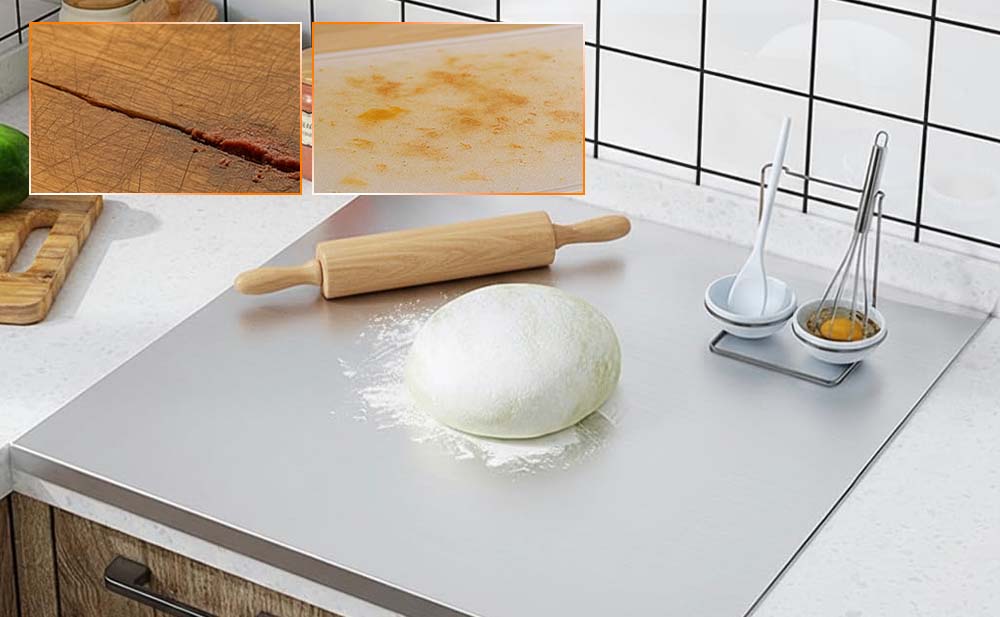
The Porosity Trap: Your Board’s Hidden Enemy
Wood is organic and porous. Under a microscope, tiny channels in the grain can absorb juices, oils, and bacteria from the foods you cut.
Plastic has a different problem: every knife cut creates small grooves where residue can collect.
Once bacteria settle into those spaces, they can form a biofilm—a protective layer that may be harder to remove with normal washing.
In other words, the surface can look clean while buildup remains below.
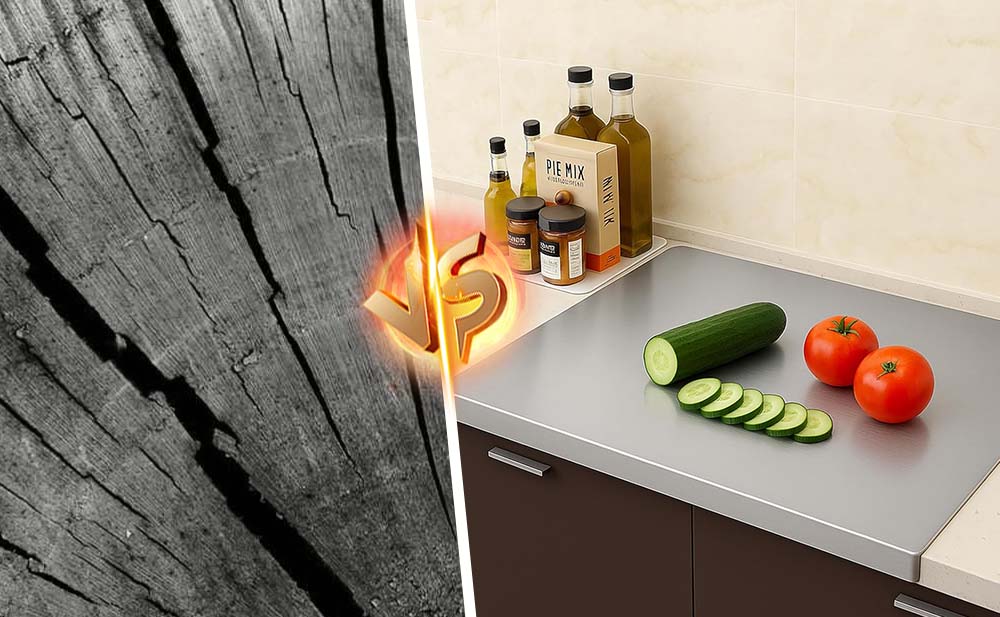
The Microplastic Question
Bacterial contamination isn’t the only concern.
A 2024 study published in Environmental Science & Technology examined how plastic cutting boards can release tiny particles during chopping.
Repeated knife contact can shave microscopic plastic particles from the surface and into food.
The amount varies by material, condition, and use, but the finding has raised new questions about worn plastic boards.
Environmental health researcher Dr. Michael Torres puts it bluntly:
“When you use a plastic cutting board, you’re not just preparing food. You’re making plastic an ingredient.”
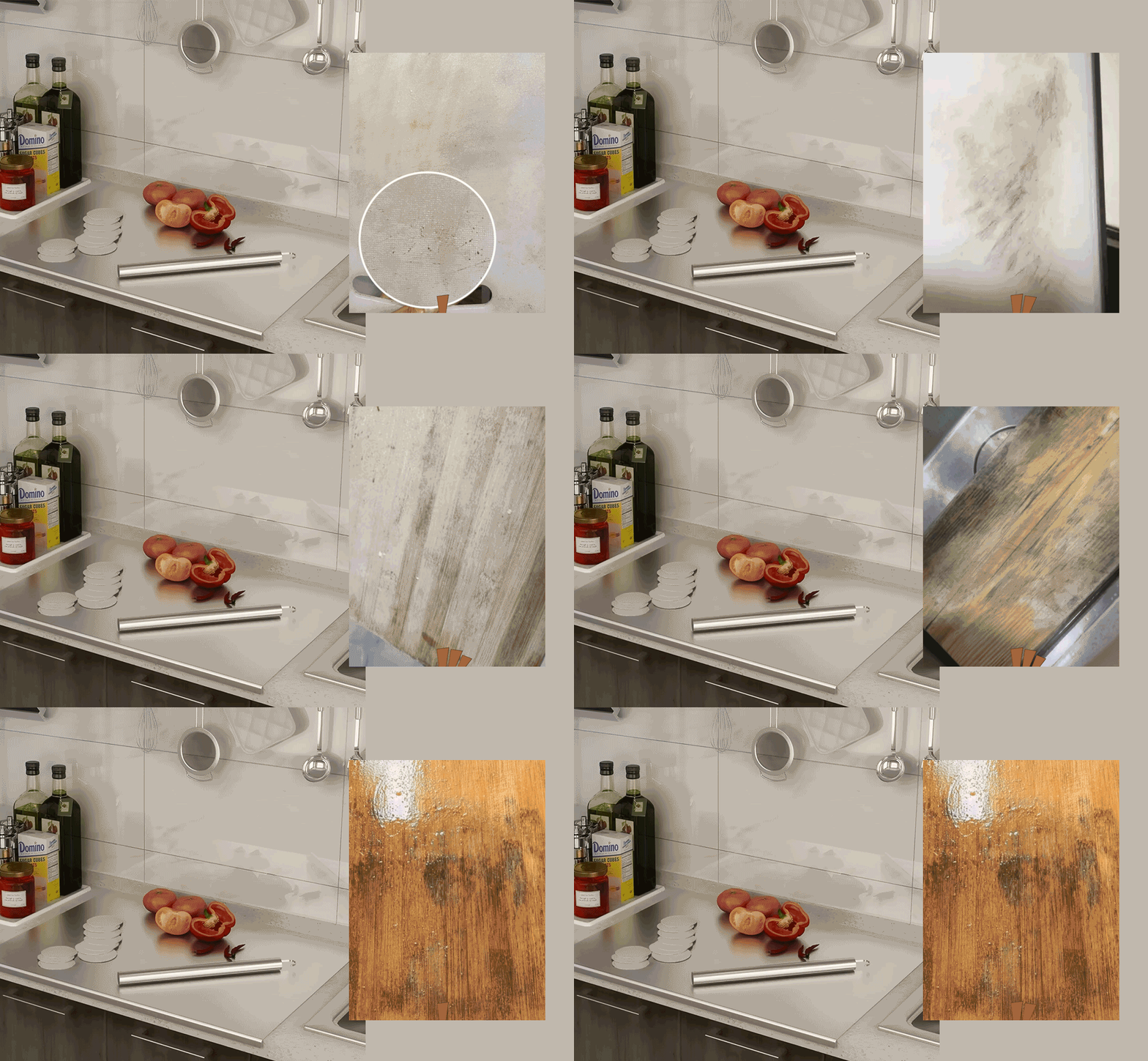
Three Common Cutting-Board Mistakes
Mistake #1: Believing “Clean-Looking” Means “Actually Clean”
Visual cleanliness and sanitary safety aren’t always the same thing. A freshly washed board can still hold residue in pores or knife grooves.
Mistake #2: Replacing Plastic Boards Again and Again
New plastic boards start smooth, but regular chopping quickly creates scratches. Replacing the board may simply restart the same cycle.
Mistake #3: Depending on Harsh “Deep Cleaning”
Strong cleaners can address the surface, but they don’t change the underlying structure of wood or scratched plastic.
The bigger question: Is there an easier material to maintain?
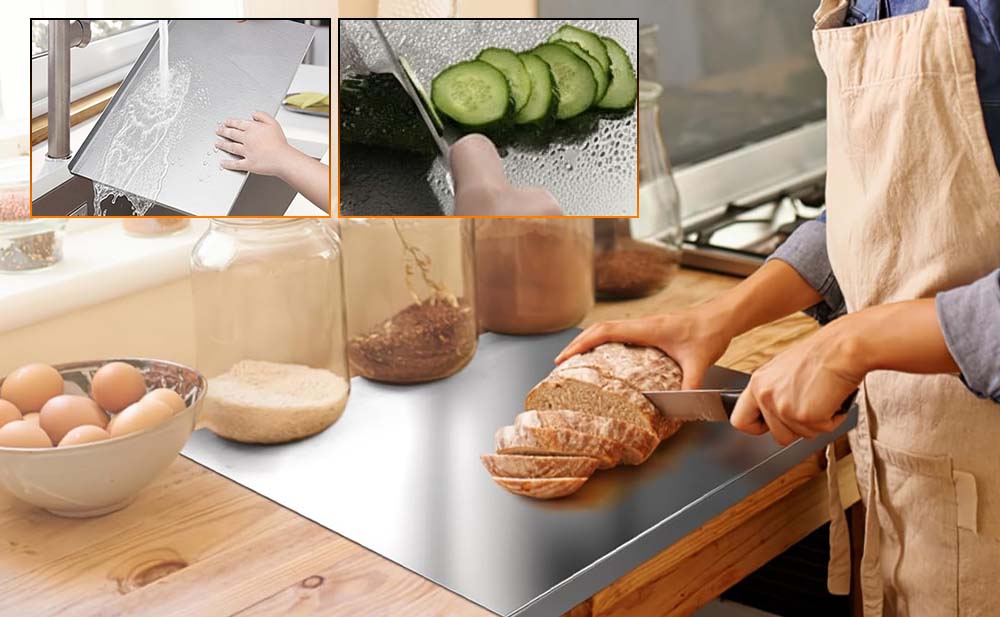
Why Professional Kitchens Rely on Stainless Steel
Walk into a professional kitchen and stainless steel is everywhere—from counters to prep surfaces.
There’s a practical reason: stainless steel is non-porous, durable, and easy to wipe clean.
Until recently, stainless steel prep boards were often industrial, oversized, or expensive for home use.
That’s finally changing.
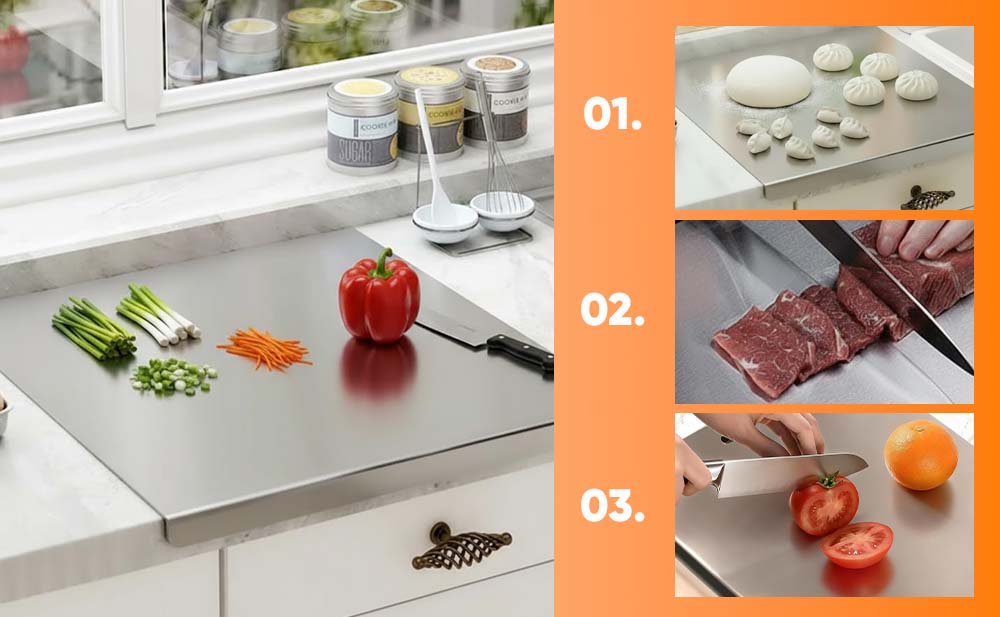
Introducing: The Sakerplus® Stainless Steel Kitchen Cutting Board
Sakerplus® has brought a restaurant-style stainless steel prep surface into a slim cutting board designed for everyday home kitchens.
It’s built for cooks who want a durable, non-porous surface that’s easy to rinse, wipe, and reuse.
How Does It Work?
The Sakerplus® board is constructed from high-grade passivated stainless steel. This creates what’s known as Ion-Shield™ Non-Porous Technology.
Here’s what that means in plain English:
Zero Porosity = Zero Bacterial Hiding Places
Unlike wood (which drinks up bacteria) or plastic (which hides bacteria in scratches), the Sakerplus® surface is impenetrable. Bacteria sit exposed on the surface, where a simple rinse washes them completely away.
Chromium Oxide Deodorization
Here’s something incredible: The steel itself neutralizes odors chemically.
When sulfur molecules (the source of garlic, onion, and fish smell) touch the chromium in the steel, they bind to it and are neutralized instantly. It’s the same principle behind “stainless steel soap” bars—except your entire cutting surface becomes a deodorizer.
Cut garlic. Rinse the board. Immediately cut strawberries. Zero flavor transfer.
Temperature Resistant & Indestructible
- Won’t crack, warp, or chip—ever
- Handles hot pots straight from the stove
- Accelerates defrosting of frozen foods (metal conducts temperature)
- Stays cool while kneading dough (essential for pastry work)
Real People, Real Results
“I was skeptical about cutting on metal, but this board changed everything. I used to replace my plastic boards every few months because they’d get so stained and gross. This Sakerplus board? Six months later, looks brand new. I can literally see the difference when I rinse it—everything just slides off. My husband, who never notices kitchen stuff, actually commented on how good the vegetables taste now.”
“As someone who does a lot of raw meat prep (I hunt), this board is a game-changer. I used to stress about cross-contamination with my old wooden board. Now? Rinse, wipe, done. My wife loves that it doesn’t stink like my old board used to after prepping fish. Total peace of mind.”
“I’m a pastry baker, and this board is PERFECT for dough work. The metal stays naturally cool, so my butter doesn’t melt while I’m rolling. Plus, cle